
Qualitative Materiality: Definition, Factors and Examples

Qualitative materiality explains why a small figure can still be material. Covers the key qualitative factors auditors apply beyond numerical thresholds, with worked examples.
Quantitative Materiality: How Auditors Calculate Thresholds

Quantitative materiality is the numerical threshold auditors use to judge whether a misstatement is significant. Explains benchmarks, percentages, and worked examples.
What Is Materiality in Audit?

Materiality in audit is the threshold above which misstatements are judged significant enough to affect financial statement users. Explains how thresholds are set and applied.
Warranty Liabilities: Definition and Accounting Treatment
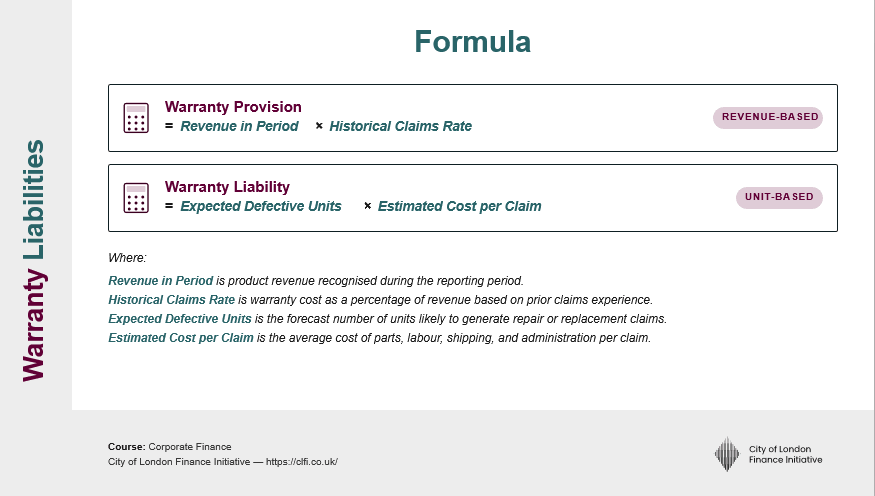
What warranty liabilities are, how they are recognised under IFRS, how to calculate them, and why they matter in financial analysis and M&A valuation.
Shareholders’ Equity: Definition, Formula & Examples

Learn what shareholders’ equity is, how to calculate it using the balance sheet formula, and what it tells you about a company’s financial position.
What Is a Data Room? Definition, Contents & How It Works

A data room is a secure document repository used in M&A and fundraising — learn what goes in one, how it is organised, and what buyers look for.
Forward P/E Ratio: Formula, Calculation & Examples | CLFI
The forward P/E ratio values a company using forecast earnings. Learn the formula, how to calculate it, and when to use it alongside other valuation tools.
Carried Interest: Definition, Formula and Examples | CLFI

Carried interest allocates 20% of fund profits above the hurdle to the GP, but only after LPs recover capital and earn their preferred return.
Dividend Discount Model (DDM): Formula and How It Works | CLFI
The dividend discount model values a stock by discounting its expected future dividends. Learn the formula, types, and a worked example.
Non-GAAP Financial Measures Explained | CLFI
A clear explanation of non-GAAP financial measures, including adjusted EBITDA, adjusted EPS, and how to interpret reconciliation disclosures.