Table of Contents

What Is Generative AI and Why It is Critical to Understand How it Works

Generative Artificial Intelligence has moved rapidly from research labs into boardrooms, finance teams, and executive workflows. Unlike earlier forms of automation, generative AI does not simply classify, predict, or optimise within predefined rules. It produces new content, text, images, code, or scenarios, based on patterns learned from data. This capability creates genuine productivity gains, but it also introduces new risks for organisations that confuse fluent output with analytical truth.

This article explains what generative AI is, how it works at a conceptual level, where it creates real value, and where its limitations become critical, particularly in finance, strategy, and governance contexts.

Table of Contents

What generative AI actually is

Generative AI is a category of artificial intelligence designed to produce new outputs rather than simply analyse existing ones. Instead of returning a classification, a probability, or a recommendation within fixed boundaries, generative models create text, images, audio, code, or structured scenarios that did not previously exist, based on patterns learned from large datasets.

This distinguishes generative AI from earlier analytical or predictive systems used in business intelligence, credit scoring, or risk modelling. Those systems operate within explicit mathematical rules. Generative AI, by contrast, operates within statistical language and pattern spaces, allowing it to assemble responses that resemble human-produced output. The benefit is flexibility and speed. The risk is that the output may appear coherent even when the underlying logic is weak or incomplete.

For executives, the critical point is that generative AI does not replace domain expertise. When integrated thoughtfully, generative AI can streamline research, enhance drafting precision, and accelerate exploration across a wide range of domains. However, when deployed without controls or contextual grounding, it may introduce assumptions that cannot be sourced, verified, or defended, which ultimately undermines the accountability that senior decision-making requires.

Below is a quick overview of distinct AI tools that are already being adopted by individuals, professionals, and organisations to support specific use cases

CLFI: 2026 Leading Generative AI Tools
Updated Jan 2026

Generative AI Ecosystem

The definitive landscape of market-leading AI platforms for the 2026 fiscal year.

Platform & Developer Core Capabilities (2026) Origin
Reasoning & Text Generation
Advanced reasoning, agentic workflows, and multi-modal search. United States
DeepSeek-V3 DeepSeek AI
High-efficiency reasoning and coding (Leading Price/Performance). China
Claude 3.5/4 Anthropic
Artifacts UI, nuanced writing, and complex data extraction. United States
Mistral Large 2 Mistral AI
European open-weight models with strong multilingual capabilities. France
Video & Motion Generation
Kling AI Kuaishou
Cinematic 1080p text-to-video with physics consistency. China
Sora OpenAI
Advanced text-to-video with temporal consistency. United States
Professional video-to-video and advanced camera controls. United States
Software Engineering & Code
Cursor Anysphere
Full-repo indexing with agentic “Composer” code generation. United States
Windsurf Codeium
The first agentic IDE with deep flow-state integration. United States
Audio & Music
ElevenLabs ElevenLabs
Universal dubbing, emotion-controlled voice synthesis. United States
Suno V4 Suno AI
Radio-quality full song generation with lyrics and vocals. United States

How generative AI works in practice

Most modern generative AI systems are built on large language or multimodal models trained on vast collections of text, images, or other data. During training, the model is not taught facts or rules. Instead, it learns statistical patterns: which words tend to follow others, or which features tend to appear together.

Training is followed by refinement techniques such as fine-tuning or reinforcement learning with human feedback, which steer outputs toward what users find useful or acceptable. Once deployed, the model generates responses incrementally, evaluating at each step what the most statistically likely continuation should be, given the input and its learned patterns.

A large language model (LLM) such as GPT does not “understand” text in the human sense, nor does it reason through problems step by step like a rules-based system. At its core, an LLM is a probabilistic prediction engine. It is repeatedly trained to answer a single question: “Given this sequence of words, what word is most likely to come next?” When generating text, the model does not plan the full sentence in advance. It selects each word one at a time based on probability distributions. This is why outputs can sound fluent and confident while still being wrong: the model is optimising for linguistic plausibility, not factual certainty or rule-based correctness.

Definition

Probabilistic generation

An approach in which outputs are produced by selecting the most statistically likely next element in a sequence, rather than by applying predefined rules, formulas, or deterministic logic.

This distinction explains why generative AI differs fundamentally from deterministic systems such as accounting models or valuation formulas. A financial model will always calculate EBITDA the same way if inputs are unchanged. A generative model may describe EBITDA differently depending on phrasing, context, or missing information. This is not a flaw — but it is a structural constraint that must be understood.

Where generative AI creates value and where it should not be trusted

Generative AI is most valuable when the task is exploratory rather than exact. It performs well when the objective is to read quickly, synthesise broadly, or draft an initial version that a human will later refine. This includes summarising long documents, extracting themes across reports, preparing briefing notes, or exploring alternative ways to frame a question. In these situations, speed and linguistic fluency matter more than numerical precision.

The limits appear as soon as the task demands accountability. Generative AI does not reconcile figures, apply accounting standards, or preserve point in time accuracy. It does not know when a number is material, audited, or legally binding. Without structured data, controls, and clear boundaries, it can present outputs that sound credible but would not survive scrutiny in a finance, legal, or regulatory setting.

Case Outcome:

Partial Refund Following AI-Generated Report Errors

In October 2025, Deloitte agreed to refund part of a $440,000 contract with the Australian federal government after errors were identified in a report produced for the Department of Employment and Workplace Relations. The report, which reviewed a departmental compliance system, contained several incorrect citations and references. Deloitte later disclosed that generative AI had been used to assist in drafting sections of the report. Although the firm maintained that its findings and recommendations remained valid, the final payment under the contract was withheld. The matter was resolved directly with the department, and the updated version of the report now includes a formal note about AI use.

This is why many organisations are deliberately narrowing how generative AI is used. Rather than relying on open interfaces, they anchor models to curated datasets, approved documents, and traceable sources. The aim is not to slow teams down, but to combine speed with the ability to verify, challenge, and explain outputs when decisions matter.

Why AI adoption becomes a governance issue the moment it fragments

Once generative AI is used informally across teams, governance becomes unavoidable. Documents are uploaded, excerpts are pasted, and questions are asked outside the organisation’s visibility. Over time, this creates an information risk that is difficult to map or control. Not because AI is dangerous by default, but because usage patterns emerge before policies do.

This explains the strategic push toward enterprise embedded AI. By integrating AI directly into existing productivity environments rather than asking employees to adopt separate tools, organisations reduce adoption friction while keeping usage inside known security and permission boundaries. The technology becomes part of how work is done, not an experiment running alongside it.

This is where Microsoft Copilot deserves to be treated as a category of its own. In 2026, Copilot is no longer simply an assistant or a conversational interface. It functions as an orchestration layer embedded across the Microsoft 365 environment, with native access to emails, documents, calendars, meetings, and workflows. Unlike standalone AI tools that require users to move data in and out of separate applications, Copilot operates inside existing systems, permissions, and compliance boundaries. Its value is not that it generates content, but that it connects actions across Word, Excel, Teams, Sharepoint, and OneDrive without requiring a separate implementation effort. In practical terms, this shifts AI adoption from an individual productivity choice to an organisational capability that can scale while remaining governed.

CLFI: Enterprise AI Ecosystems
Enterprise Ecosystems & Orchestration
Copilot Microsoft
Native integration across Word, Excel, Teams, Outlook, and Power Automate for cross-application workflow orchestration. United States

What this means for finance, risk, and leadership

For finance, risk, and governance leaders, the takeaway is not that generative AI should be avoided. It is that it should be used with clarity about what it is and what it is not. Generative AI can help professionals move faster, see patterns sooner, and explore alternatives more efficiently. It cannot take responsibility, reconcile truth, or stand behind a decision when it is challenged. That responsibility remains firmly human. Organisations that get this right are not the ones chasing the most impressive outputs, but the ones that can explain how an answer was formed, what it relied on, and where its limits are.

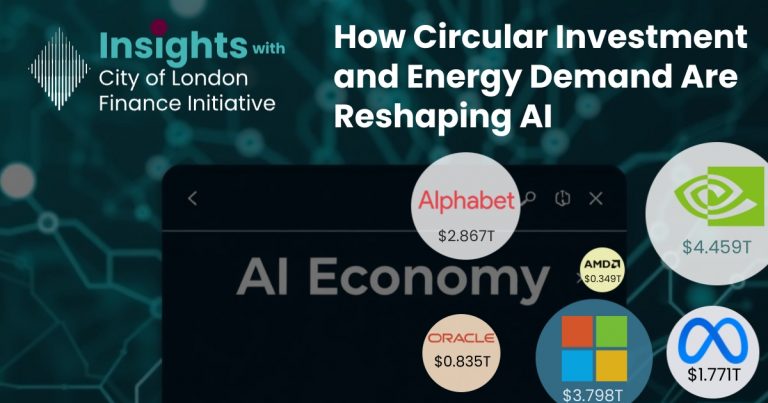
For leaders and professionals who have not yet integrated AI into their day to day work, the most sensible next step is not large scale transformation, but basic, deliberate use. Learning what an hallucination looks like in practice, understanding the limits of a context window, and recognising how training data boundaries shape what a model can and cannot answer are essential to building sound judgement. These concepts are not academic details. They are practical guardrails. Without them, AI appears either magical or threatening, depending on the headline of the week. In reality, much of the public narrative focuses on technical milestones or market valuations that say little about how AI behaves in everyday professional settings. Familiarity comes from use, not headlines. And clarity comes from understanding both the capability and the constraint.

CLFI Insight Box

Continue the Discussion

If you want to explore how these dynamics are already shaping the economy and professional roles, the following CLFI Insight articles expand on the practical and strategic implications of AI beyond headlines.
Programme Content Overview

The Executive Certificate in Corporate Finance, Valuation & Governance delivers a full business-school-standard curriculum through flexible, self-paced modules. It covers five integrated courses — Corporate Finance, Business Valuation, Corporate Governance, Private Equity, and Mergers & Acquisitions — each contributing a defined share of the overall learning experience, combining academic depth with practical application.

CLFI Executive Programme Content — Course Composition Chart

Chart: Percentage weighting of each core course within the CLFI Executive Certificate curriculum.

Price Is a Data Point. Value Is a Decision.

Learn more through the Executive Certificate in Corporate Finance, Valuation & Governance – a structured programme integrating governance, finance, valuation, and strategy.