

Table of Contents
From Financial Controller to Finance Director: What Actually Changes
- 5 min read
- Authored & Reviewed by: CLFI Team
Many Financial Controllers assume the move to Finance Director is a natural progression. After years mastering reporting, audit coordination, compliance, and budgeting, the next title can appear to be a matter of time. In practice, the transition reflects a shift in scope and responsibility, with greater accountability and the expectation that finance can be translated into decisions that influence the board and senior leadership.
At Financial Controller level, responsibility centres on delivering the standards expected of the accounting profession, with a strong emphasis on accuracy, control, and reliability. At Director level, the remit expands to capital allocation, strategic trade offs, board communication, and stakeholder credibility. The distinction increasingly rests on exposure to strategic decision environments rather than technical capability alone.
In many mid market and growth stage businesses, interviews for a Finance Director role move quickly beyond reporting accuracy. Discussion often focuses on the teams you have built and managed, how you collaborate with operations, sales, and product, and whether you understand the commercial drivers behind performance.
The question is rarely whether you can close the month.
It is whether you can support a business that is scaling.
In today’s service economy, particularly within software, AI, and technology sectors, growth can accelerate quickly. Revenue models evolve, margins shift, and cost structures expand unevenly as volume increases. Finance Directors are expected to understand scalability, including how systems, processes, capital structures, and teams must adapt as the organisation grows. This requires a broader business perspective than traditional controllership alone.
Programme Content Overview
The Executive Certificate in Corporate Finance, Valuation & Governance delivers a full business-school-standard curriculum through flexible, self-paced modules. It covers five integrated courses — Corporate Finance, Business Valuation, Corporate Governance, Private Equity, and Mergers & Acquisitions — each contributing a defined share of the overall learning experience, combining academic depth with practical application.

Chart: Percentage weighting of each core course within the CLFI Executive Certificate curriculum.
Capital Is a Resource. Allocation Is a Strategy.
Learn more through the Executive Certificate in Corporate Finance, Valuation & Governance – a structured programme integrating governance, finance, valuation, and strategy.
From Reporting Integrity to Capital Consequence
The transition from Financial Controller to Finance Director is frequently described as a move from operational to strategic responsibility, yet the shift is more specific. At Controller level, credibility is built on accuracy, compliance, and financial control, ensuring reporting is correct and defensible. At Director level, those same financial outputs inform decisions that influence growth, risk exposure, funding structures, and long term enterprise value.
When a business enters phases of expansion, refinancing, acquisition, or external investment, the Finance Director operates as the interpreter between operational performance and capital consequence. Choices around headcount growth, pricing architecture, debt structure, or acquisition targets extend beyond accounting treatment and carry implications for scalability, investor confidence, and valuation positioning.
Over the past decade, the remit of senior finance roles has expanded as digital systems and increasingly AI automate routine control work and reshape how financial knowledge is applied. As processing becomes more efficient, the value of senior finance leadership increasingly lies in interpretation, direction, and strategic context, while private capital participation and governance scrutiny have raised expectations of commercial fluency.
What changes between Controller and Director
The difference between a Financial Controller and a Finance Director becomes clearer when accountability is examined across daily operations, risk exposure, capital decisions, and external relationships. The shift is not about working harder. It is about operating at a different altitude within the organisation.
| Feature | Financial Controller | Finance Director |
|---|---|---|
| Primary Focus | Financial accuracy, reporting, internal controls | Strategic growth, long term planning, return on capital |
| Data Perspective | Historical accuracy and variance analysis | Forward looking forecasting and performance improvement |
| Reporting | Month end accounts, P&L, balance sheet production | Board level insight and strategic interpretation |
| Risk Management | Compliance, fraud prevention, tax oversight | Market risk, investment exposure, acquisition risk |
| Cash & Funding | Liquidity monitoring and credit control | Securing funding, managing lenders and investors |
| Budgeting | Managing budgets and variance reporting | Setting financial direction and capital priorities |
| External Relations | Auditors and tax authorities | Investors, banks, board stakeholders |
| Leadership | Managing accounting team and processes | Leading finance strategy and cross functional influence |
These distinctions become visible during periods of pressure such as funding rounds, refinancing decisions, acquisitions, or rapid scaling, where financial interpretation rather than reporting completeness influences the direction of the business. For a side-by-side view of the four roles, see our comparison of CFO, finance director and financial controller roles.
Where progression often stalls
Progression can slow when exposure remains centred on reporting excellence rather than decision visibility. An individual may be highly trusted for operational control, yet advancement increasingly depends on being seen contributing in settings where capital trade offs, risk positioning, and long term strategy are openly evaluated.
Search committees assessing Finance Director candidates therefore look for familiarity with corporate finance principles, valuation reasoning, governance frameworks, and capital structuring considerations, as these signal readiness for responsibility that extends beyond accounting stewardship.
What differentiates those who make the transition
Finance professionals who progress successfully tend to broaden their exposure deliberately, extending their remit beyond reporting cycles into areas where capital, risk, and strategy intersect. This may include closer involvement in investment appraisal, governance discussions, funding evaluations, or transaction processes that shape enterprise value.
The distinguishing factor lies in strategic literacy, meaning the ability to interpret financial information within the wider context of scalability, risk appetite, and long term positioning.
Disciplines such as Corporate Finance, Business Valuation, Corporate Governance, Private Equity, and Mergers & Acquisitions increasingly form part of the knowledge base expected at Director level.
For many professionals, the transition therefore reflects preparation and exposure rather than timing alone. For the full route to the role, see How to Become a Finance Director. For the step after it, see Finance Manager to CFO: The Skills and the Route.
Explore the City of London CFO Programme, covering corporate finance, business valuation, private equity and M&A, or add governance through the Executive Certificate in Corporate Finance, Valuation & Governance.
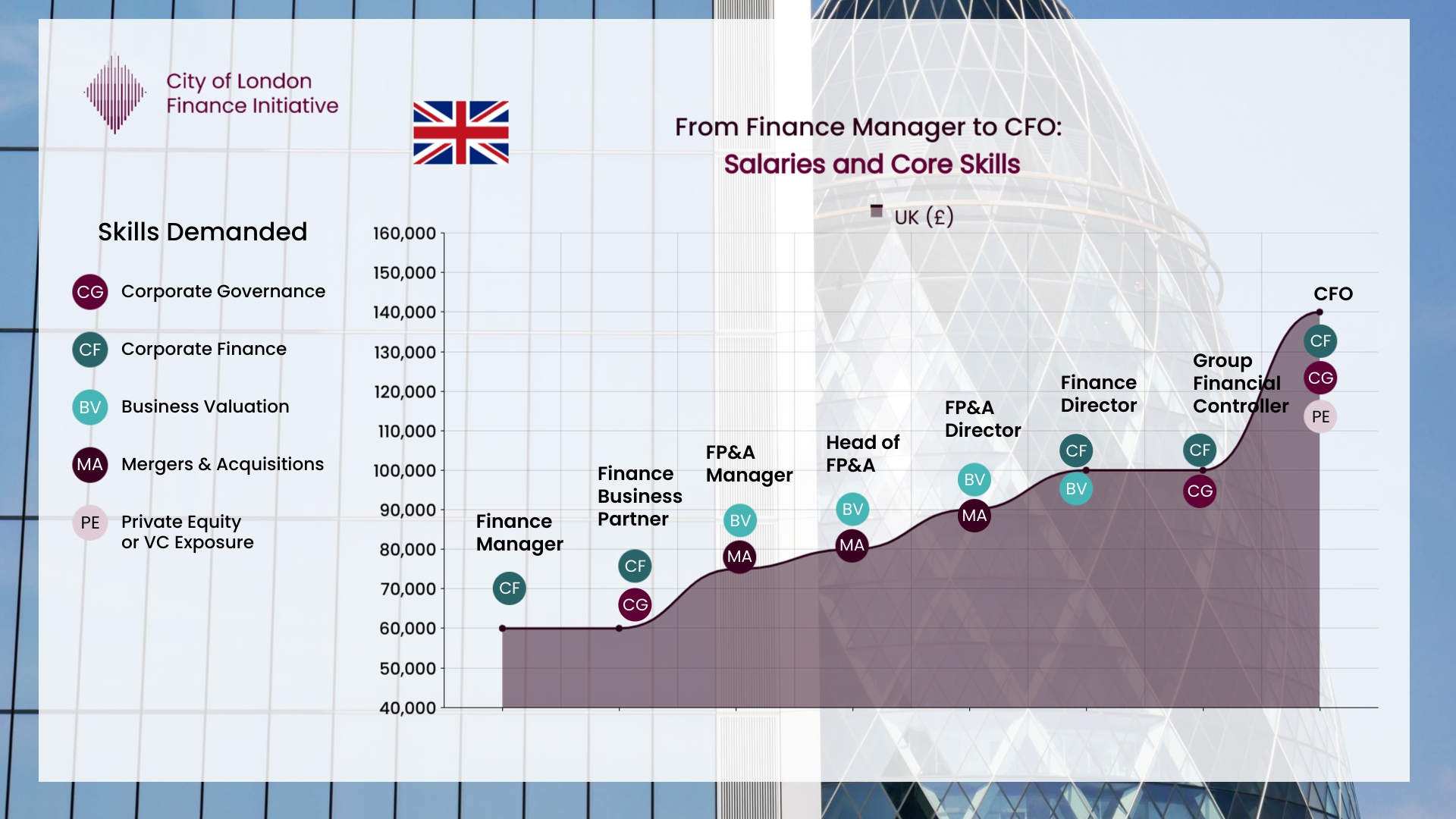
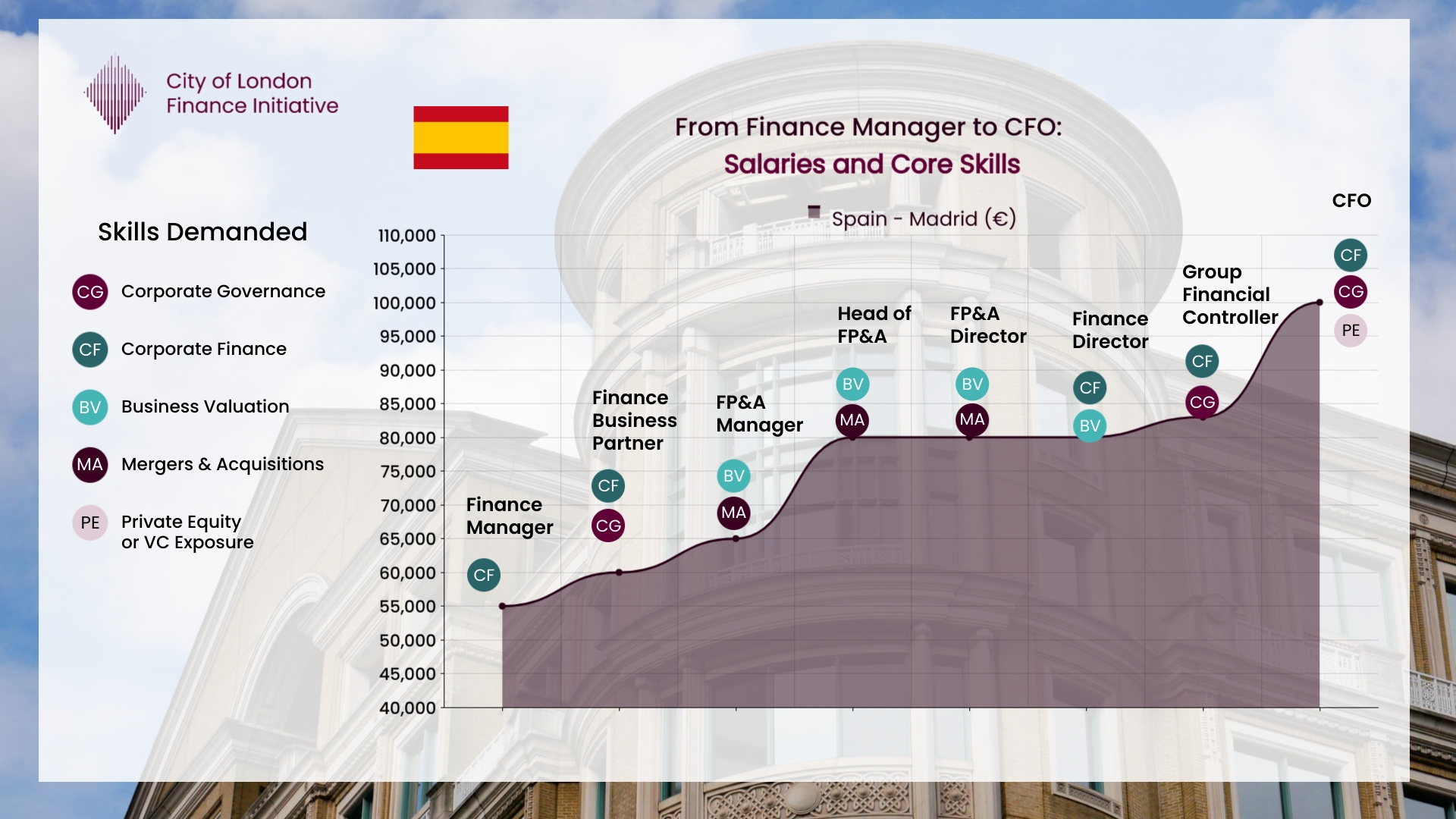
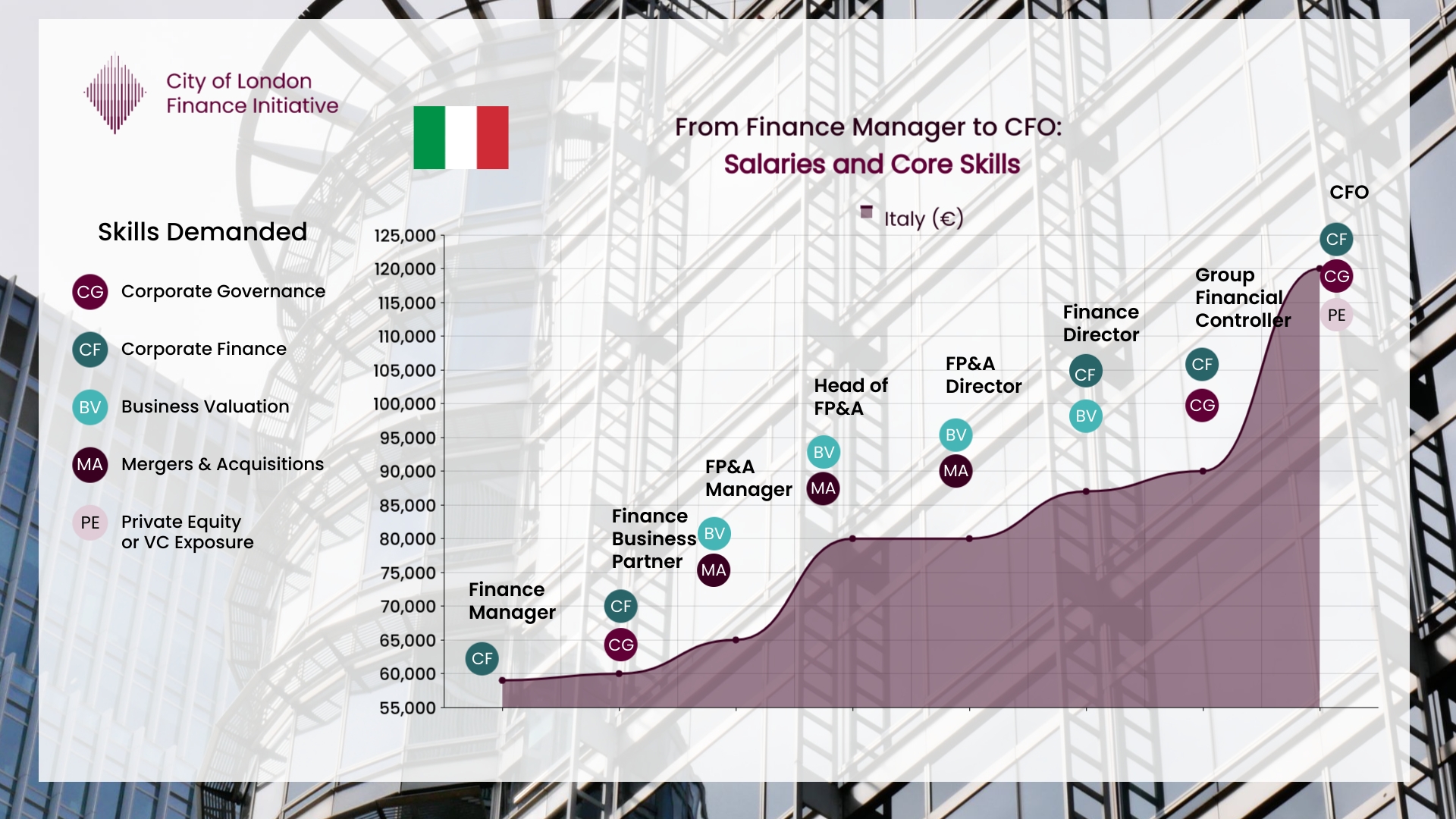
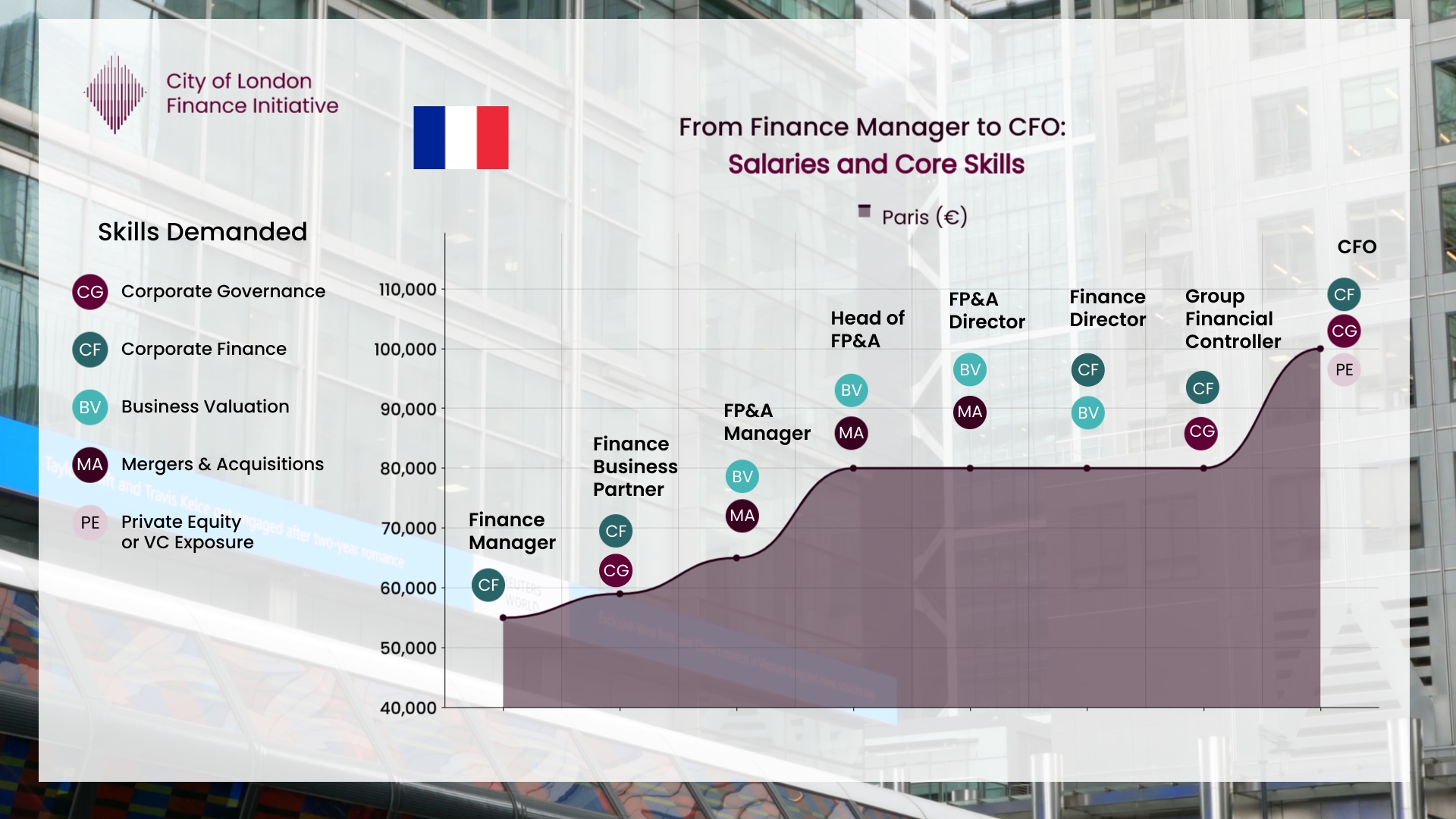
Finance Director salary ranges
Compensation at Finance Director level reflects the scale of accountability attached to the role. Across mid market, private equity backed, and growth stage organisations, salary ranges vary according to sector, geography, capital intensity, and exposure to investors or boards. In larger or investor facing environments, remuneration often combines fixed salary with performance related components, reflecting the Director’s influence over capital decisions, scalability, and long term enterprise value. The ranges below illustrate how the market currently prices this broader scope of responsibility.
Explore how the Executive Certificate in Corporate Finance, Valuation & Governance supports this transition.
Further Reading
- How to Become a CFO in the UK: Qualifications and Career Path
- Finance Director CV Skills Employers Look For in 2026
- Net Present Value (NPV): definition, interpretation, and use in investment decisions
- Internal Rate of Return (IRR): how it is used and where it misleads
- Discounted Cash Flow (DCF): how valuation outputs are built and challenged
- UK Corporate Governance Code: board responsibilities in capital allocation and oversight