Skip to content
  • Home
  • Curriculum
    • Corporate Finance Course
    • Corporate Governance Course
    • Business Valuation Course
  • Formats
    • Full Online
    • Hybrid Programme
    • In-Presence Programme
  • More
    • About Us
    • News & Insights
    • Career Development
    • Glossary
  • Home
  • Curriculum
    • Corporate Finance Course
    • Corporate Governance Course
    • Business Valuation Course
  • Formats
    • Full Online
    • Hybrid Programme
    • In-Presence Programme
  • More
    • About Us
    • News & Insights
    • Career Development
    • Glossary

What Is CAPEX? Meaning, Examples, and AI Era Use
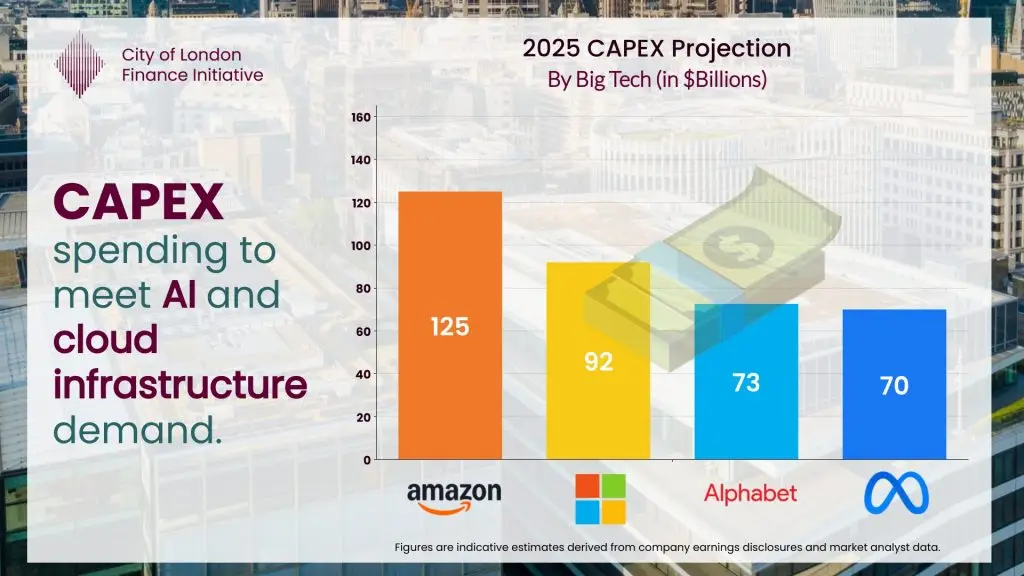
AI and cloud infrastructure capital expenditure by Amazon, Microsoft, Alphabet, and Meta, showing planned CAPEX levels to support growing AI demand.

Learn what CAPEX means in finance, how it differs from OPEX, and how capital expenditure is used today in software, cloud, and AI infrastructure.

Net Present Value (NPV): Definition, Formula, and Calculation
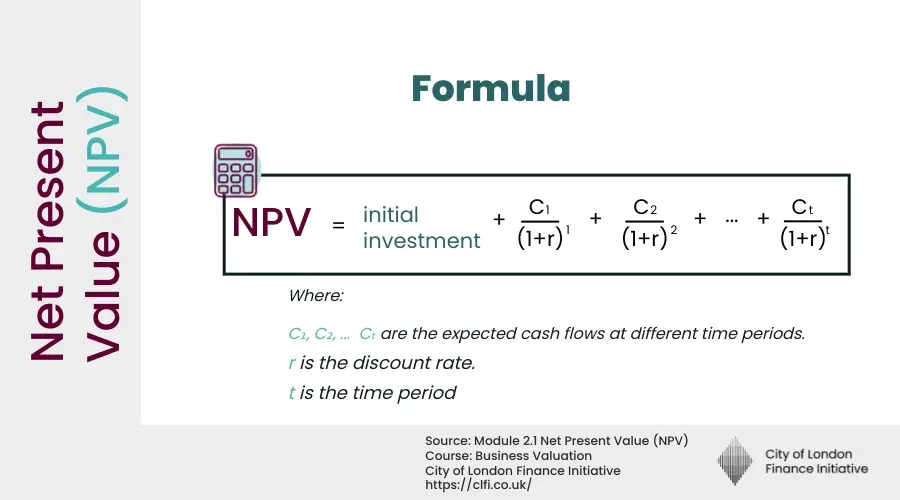
Visual formula for Net Present Value (NPV) showing the sum of all discounted future cash flows minus the initial investment, demonstrating value creation.

Learn how Net Present Value (NPV) evaluates investments by discounting future cash flows, and why it remains the preferred decision rule in corporate finance.

Payback Period Explained: Definition, Formula, and Calculation
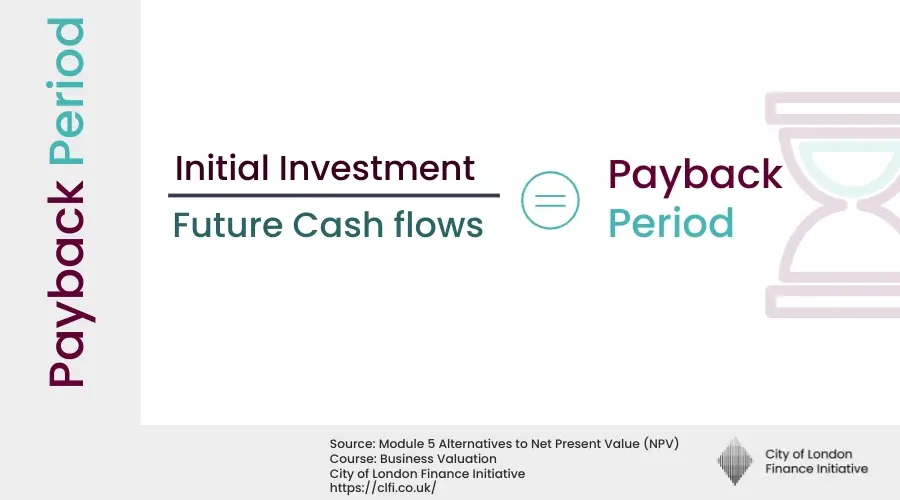
Visual formula for Payback Period showing Initial Investment Cost divided by Annual Cash Flow

Learn how the payback period works, where it helps, and why it must be used alongside NPV in capital investment decisions.

How Private Equity Values Target Companies | Private Equity Series | CLFI

Learn how private equity investors value target companies, from venture-style projections to EBITDA multiples and exit scenarios.

Private Equity Deal Types Explained | Private Equity Series | CLFI

A clear, stage-by-stage definition to private equity deal types, from seed to turnaround financing. Ideal for executives, founders, and finance learners.

What Is Growth Equity? A Practical Guide for Executives | Private Equity Series | CLFI

Learn what growth equity is, how it differs from venture capital and buyouts, and how minority growth investors partner with founders to fund expansion and create value.

Private Equity: How Deals Are Structured | Private Equity Series | CLFI

Understand the fundamentals of private equity, including deal structuring, investment approaches, and value creation.

Break-Even Analysis: What It Is and How the Break-Even Point Is Calculated| Accounting Series | CLFI

Learn what break-even analysis is and how the break-even point is calculated in sales, units, and price with clear formulas and examples.

What Is Goodwill in Accounting and M&A? Definition and Example | Accounting Series | CLFI

Learn what goodwill is in accounting and M&A, how it is calculated, and why buyers pay more than net assets during acquisitions.

Tangible vs Intangible Assets: Definition and Difference | Accounting Series | CLFI

Learn the difference between tangible and intangible assets, with definitions, examples, and how depreciation and amortisation affect the balance sheet.

← previous
Next →

City of London

Finance Initiative

© 2025 CLFI. Limited Company Registered in England. 36–38 Cornhill, London EC3V 3NG.

Manage Consent

We use cookies to remember your preferences and enhance your experience. By clicking “Accept All,” you agree to our use of all cookies. You can manage your preferences in “Cookie Settings.”

Functional Always active
The technical storage or access is strictly necessary for the legitimate purpose of enabling the use of a specific service explicitly requested by the subscriber or user, or for the sole purpose of carrying out the transmission of a communication over an electronic communications network.
Preferences
The technical storage or access is necessary for the legitimate purpose of storing preferences that are not requested by the subscriber or user.
Statistics
The technical storage or access that is used exclusively for statistical purposes. The technical storage or access that is used exclusively for anonymous statistical purposes. Without a subpoena, voluntary compliance on the part of your Internet Service Provider, or additional records from a third party, information stored or retrieved for this purpose alone cannot usually be used to identify you.
Marketing
The technical storage or access is required to create user profiles to send advertising, or to track the user on a website or across several websites for similar marketing purposes.
Manage options Manage services Manage {vendor_count} vendors Read more about these purposes
View preferences
{title} {title} {title}